Ibiza Lifestyle: Iconic Places, White Light and Mediterranean Living
Some islands are visited. Ibiza stays with you.

It arrives first through clarity. A dry whiteness that catches the walls, crosses the pine trees, slips over stone and turns the sea into a moving surface. Then come the contrasts. The silence of a secondary road at noon. The sound of a dinner stretching late into the night. A white house lost in the hills. A terrace open to the sea. A village where you can still feel the presence of artists, artisans and travellers who chose to stay.
To explore the Ibiza lifestyle is to understand how the island continues to influence Mediterranean decoration, summer homes and interiors open to the sea.
Ibiza has long been told through its nocturnal energy. That reading tells only one side of the island. Ibiza obviously has that intensity. It loves long nights, moving bodies, music travelling until morning. Its real power also lies in its ability to bring together celebration and retreat, rawness and refinement, solar brightness and mineral depth, the simplicity of a country house and the elegance of a perfectly composed interior.
This tension gives the island its depth.
At Viñas Genève, a city, a mountain or an island becomes interesting when it moves beyond the postcard. Ibiza inspires us because it has a very strong visual language. Warm whites. Deep blues. Natural materials. Low, open, silent architecture. A way of living between indoors and outdoors that directly echoes our view of decoration, textiles and art de vivre.
The Ibiza lifestyle, when understood with precision, speaks of space, rhythm and controlled freedom. It can be felt on a terrace still fresh in the morning, at a simple table set beneath the pines, in a white bedroom open to the sea, in an old armchair placed beside a textured wall.
This blog offers a personal journey through some of the iconic places to see, do and visit in Ibiza, chosen for what they reveal about the island and for the way they feed a broader decorative inspiration. A way to understand why Ibiza continues to influence Mediterranean interior design, high end hospitality, summer houses and objects created to accompany these places.
Dalt Vila, the island’s white memory
It must begin with Dalt Vila.
The listed, photographed, recommended and widely commented old town immediately offers a lesson in scale. The ramparts dominate the sea, the narrow streets rise slowly, the white façades absorb the sun, the stones keep the heat of the day. Everything seems simple, with immediate depth.
This is often where one understands the difference between décor and presence.
Dalt Vila imposes a rhythm. You walk more slowly. You look more closely at walls, doors, shadows, staircases. Details become important because the whole remains sober. An old handle, a plant placed against a façade, an irregular stone, a terrace glimpsed behind a gate. Elegance comes from the silent accumulation of these details.
For anyone sensitive to interior decoration, Dalt Vila is an obvious source. Materials speak before colours. Limewash, stone, wood, iron. This is a fundamental Mediterranean grammar. It can be found today in many contemporary homes inspired by Ibiza: textured walls, natural tones, calm volumes, objects chosen with restraint.
What touches me here is the impression that time has worked better than any decorator. Beauty comes from use, patina, from the sun repeating its work every day on the same surfaces.
Dalt Vila reminds us of something essential: the most lasting luxury often begins with restraint.

Santa Gertrudis, the Ibiza of artists and lived in homes
At the centre of the island, Santa Gertrudis tells a more interior story of Ibiza.
The village has a different atmosphere from the places turned towards the sea. People come here for lunch, coffee, galleries, shop windows, and to observe those who live here part of the year or all year round. The energy is lower, slower, more daily.
It is one of the places where the Ibiza aesthetic becomes most interesting, because it leaves the spectacular behind.
Around Santa Gertrudis, you find the aesthetic that has strongly influenced Ibiza interior design: white houses, exposed beams, mineral floors, natural woods, vintage pieces, light textiles, artisan objects, spaces open to terraces. A beauty based on use and the circulation of air.
I like this Ibiza because it escapes performance. It seeks accuracy. A wooden table can be enough. A ceramic placed in the right spot can set the tone. An old armchair can say more than an over designed room.
For Viñas Genève, this approach resonates strongly. We think of textile as a presence capable of changing the balance of a sofa, a bedroom, a terrace, a moment. It introduces material, colour, sensation. Santa Gertrudis recalls precisely this idea: the atmosphere of a place often depends on very little, but that little must be exact.
Perhaps this is the true luxury Mediterranean lifestyle. An open house. A simple table. A chosen object. A material that makes you want to stay. Comfort remains visible, with lightness. Objects have presence, with restraint.

Cala Comte, colour as architecture
Cala Comte is one of those places that explains Ibiza through the sheer force of the landscape.
The sea has an unreal intensity here. Depending on the hour, it moves from pale turquoise to deep blue, then towards silvery reflections as the sun descends. The rocks cut the landscape with graphic precision. The sky feels immense. Everything seems built by colour.
It is a highly photographed place, of course. It deserves a slower kind of attention.
What interests me at Cala Comte is the way nature already composes a complete palette. Deep blue, pale sand, warm stone, luminous white, short shadows, metallic reflections. This palette explains much of Ibiza’s influence on contemporary Mediterranean decoration.
Here, it becomes clear why so many Ibiza inspired interiors use white walls, pale wood, natural fibres, deep blues and sandy tones. These decorative choices come directly from the landscape. They extend the feeling of clarity, air and openness.
In the spirit of our Ibiza Edition, this beach represents the solar side of the island. The side that makes you want to lighten materials, open windows, bring the sea into the home in touches. Blue can appear as a nuance, a contrast, an edge, a textile presence that evokes the island with subtlety.
This nuance matters.

Es Vedrà, spectacular silence
Es Vedrà is probably one of Ibiza’s most famous landscapes. Facing the rock, something resists banalisation.
The mineral mass appears offshore with theatrical force. It changes with the hour. Sometimes dark, sometimes golden, sometimes unreal. The surrounding landscape seems to step back and give it all the space.
This place fascinates because it introduces a more vertical, mysterious, magnetic dimension. After the white villages and luminous beaches, Es Vedrà brings a different gravity. It reminds us that the island also has a wilder, more archaic, more untamed side.
In a blog about iconic places to visit in Ibiza, Es Vedrà has an obvious place. Its interest goes far beyond the souvenir photograph. It gives the island symbolic depth. It creates a counterpoint to Ibiza’s solar and festive image.
For me, it is a place of contrast. You can arrive after a very clear, light day and suddenly feel something denser. The sea becomes darker. The wind takes up more space. Conversations naturally lower.
This tension between clarity and gravity strongly nourishes the island’s visual identity. It gives Ibiza a more complex soul.
And this is precisely what we look for in a textile creation inspired by a place: a tension, a memory, an emotion capable of staying.
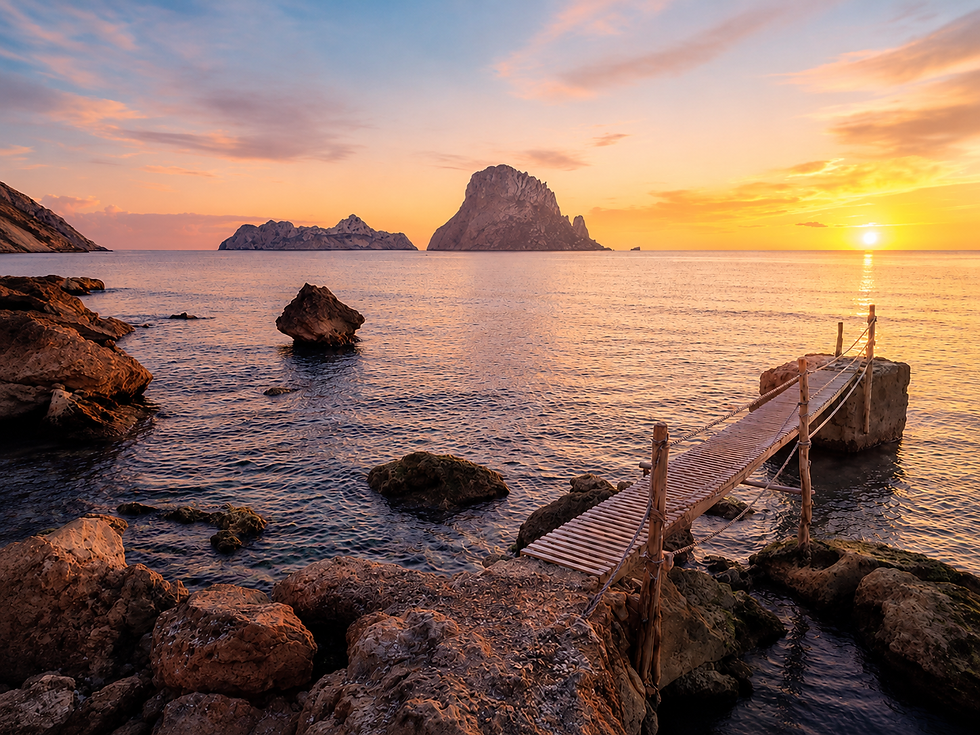
Hidden coves, where Ibiza finds its breath
Ibiza is also understood through detours.
Secondary roads, paths lined with pines, descents towards more discreet coves tell a more intimate story of the island. You leave the most visible places to find a rawer Mediterranean. Vegetation becomes more present. Stones heat up. The smells of pine, salt and dust begin to mix.
These moments matter as much as the famous places.
They give Ibiza its breath. They remind us that the island is first a territory, with its reliefs, shadows, materials and silences. For a creator, these details are precious. They give inspiration a more accurate, more living form.
Ibiza’s coves often have this direct, instinctive beauty. Clear water. Rocks. A few boats. Towels placed on stone. Baskets, linen shirts, sunglasses forgotten on a table. All this might seem anecdotal. In reality, this is often where atmosphere begins.
In the Viñas Genève universe, we attach great importance to these scenes of life. An object must be able to accompany an interior, but also a moment. A late afternoon on a terrace. Reading after lunch. A dinner continuing outdoors. A bedroom open to the sea.
The Ibiza Edition belongs to this logic. It evokes an island lived, seen, crossed, felt.

Hippy Markets, objects and the island’s artisan memory
Ibiza also has a strong material culture.
Hippy Markets, artisan boutiques, galleries and old houses tell the story of an island where objects have always played an important role. Textiles, baskets, ceramics, weathered wood, jewellery, vintage pieces, photographs, old furniture. Together, they create an imagination that goes far beyond a holiday memory.
This is where the connection with decoration becomes particularly clear.
Ibiza design inspiration comes from the landscapes, but also from this very natural way of mixing objects with freedom. An artisan piece can sit beside a modernist armchair. A rustic table can hold very refined tableware. A light fabric can soften mineral architecture.
This mix gives Ibiza interiors a particular warmth. They feel composed, alive, crossed by trace, material, travel and memory.
For readers who love decoration, the idea is simple to keep in mind: an Ibiza inspired interior gains strength when it mixes textures. A raw ceramic. Weathered wood. A light textile. A low seat. A vintage piece. Together, they create a lived-in atmosphere.
A throw, in this perspective, becomes more than a textile surface. It becomes a presence. It dialogues with an armchair, a clarity, a terrace, a season, a way of receiving.

Beach clubs and restaurants, the art of receiving by the sea
Speaking about Ibiza also calls for its places of the table.
The island has developed a very particular culture around beach restaurants, long terraces, late lunches and dinners stretching into the night. Certain addresses have shaped an immediately recognisable aesthetic: pale wood, natural fibres, simple tableware, low light, music present with measure, fluid service, an open view of the sea.
These are places where décor works when it remains in service of the experience.
This is exactly what makes these addresses interesting for the world of Mediterranean interior design. They show how to create atmosphere with few elements, but with great precision. The table, the seats, the textiles, the shadows, the circulation, the relationship to the sea. Everything counts.
In Ibiza, the art of receiving has a choreographic dimension. You arrive while the sun is still high. Glasses are filled. Plates circulate. Conversations change rhythm. Then night falls, and the same place becomes something else.
This transformation is essential. It gives the island its intensity.
For Viñas Genève, it connects with a simple conviction: the most accurate objects are those that accompany several moments with the same presence. A textile piece must be able to live in a living room, on a terrace, in a bedroom, near a pool, beside a dinner. It must change with the hours.
Ibiza reminds us of this elegant mobility.

Ibiza at night, energy as counterpoint
The night also matters.
Because night is part of Ibiza’s aesthetic construction. It changes colours, behaviours, materials. It transforms houses, terraces, streets, faces.
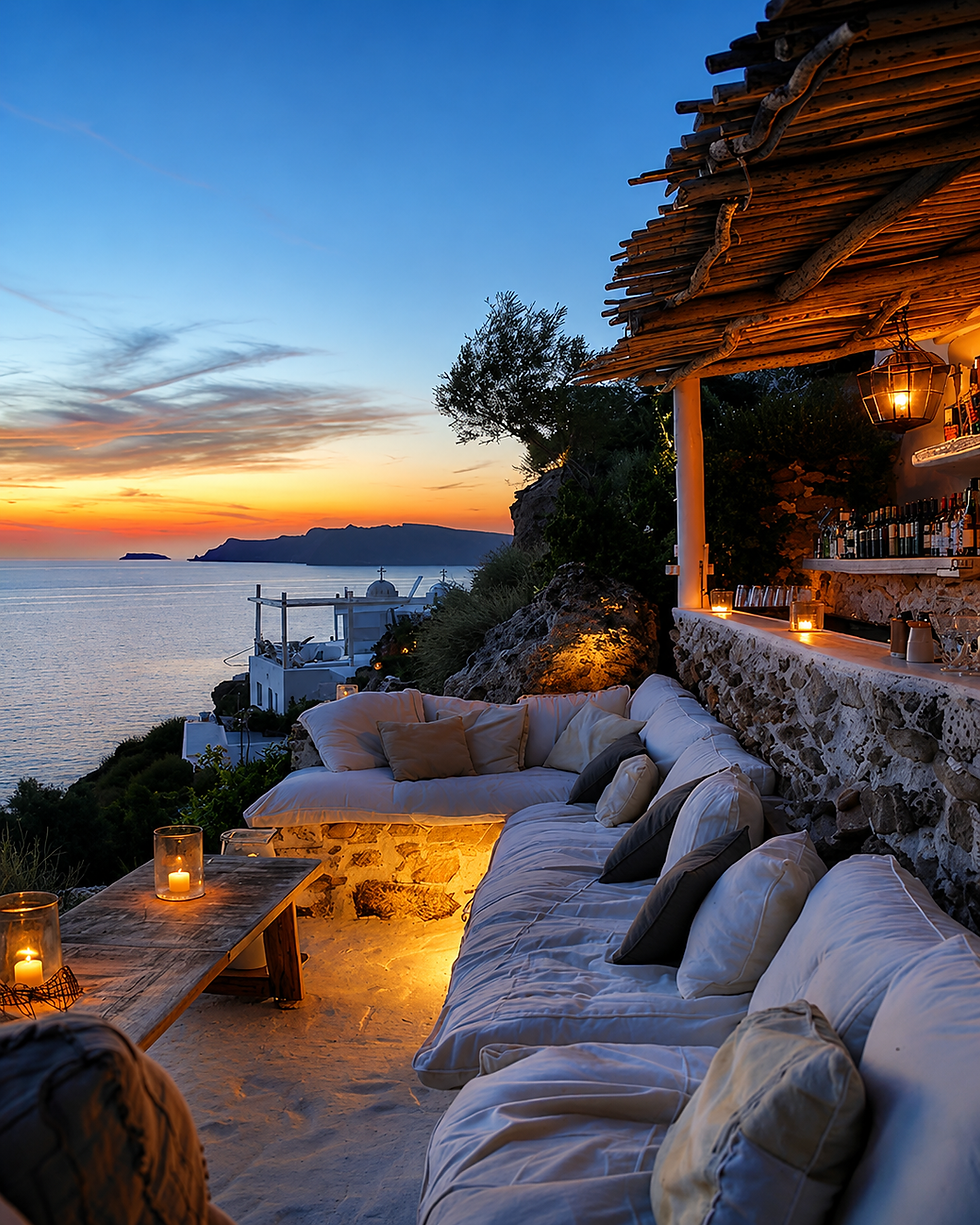
By day, Ibiza is white, blue, mineral. At night, it becomes warmer, more golden, more sonorous. Lights come closer. Interiors open. Silhouettes move. Fabrics behave differently. Perfumes become more present.
This nocturnal dimension gives the island its relief. It makes Ibiza alive.
This contrast is also what makes the Ibiza lifestyle so powerful in the contemporary imagination. It is an art of living capable of moving from absolute calm to intensity, from the silence of a cove to the vibration of an evening.
This duality interests us deeply. It brings character. It creates tension.
A collection inspired by Ibiza must carry this part of clarity and this part of night. This is how it can meet the island with accuracy.
What Ibiza taught us
Ibiza is built in layers.
The old town. The villages. The coves. The roads. The markets. The terraces. The sunsets. The long nights. The open houses. The natural materials. The objects brought back, chosen, moved, loved.
This accumulation creates its identity.
For our Ibiza Edition, we wanted to keep this sensation rather than a single image. The whiteness of the day, of course. The sea, obviously. But also the warmth of the stones, the rhythm of late afternoons, interiors open to the outside, the free elegance of Mediterranean homes, this way of receiving where every detail eventually counts.
Ibiza reminds us that luxury can be solar with restraint. That an object can be decorative while remaining alive. That a colour can evoke a place with subtlety. That a textile can extend an atmosphere rather than illustrate it.
This is probably what we seek most at Viñas Genève: to create pieces capable of carrying a memory, a clarity, a relationship to place.
Ibiza has this rare strength. It leaves images, but above all a way of feeling. A way of inhabiting the day. A way of entering the night. A way of letting beauty circulate between indoors and outdoors.
And when one leaves the island, it is often the details that remain. A white façade in Dalt Vila. A table in Santa Gertrudis. A sea too blue at Cala Comte. The silence before Es Vedrà. A road lined with pines. Warm light on a terrace.
It is in these fragments that the island continues to live.

With the Ibiza Edition, Le Plaid des Plages extends this clarity, these contrasts and this Mediterranean art de vivre into the most personal interiors and outdoor spaces.


Comments